




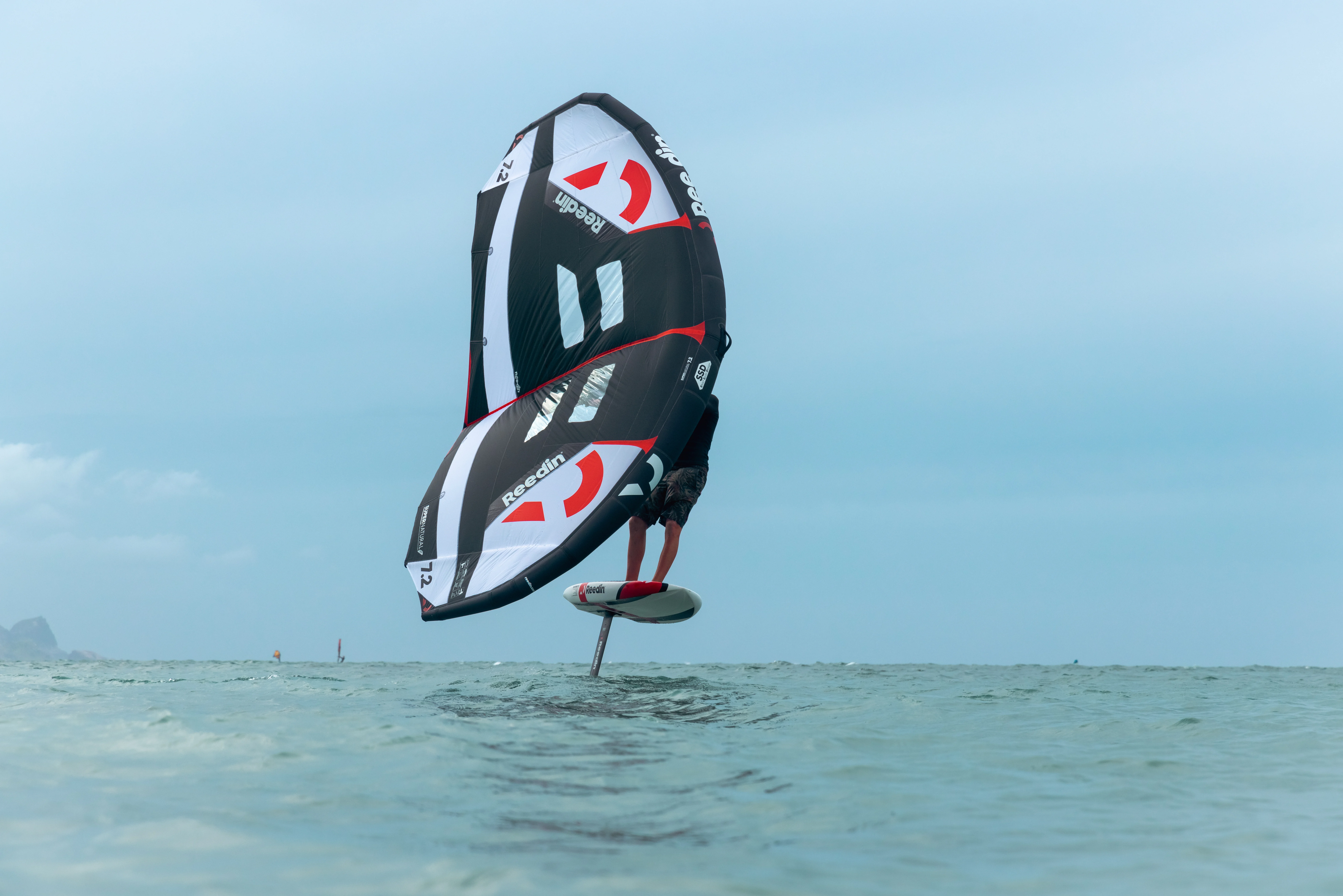
Does your foil feel overly sensitive in the air, or is it sluggish and difficult to maneuver? While the front wing usually gets all the attention, the real key to control and performance lies in a much smaller component: the stabilizer, or rear wing.
The stabilizer’s primary job is to maintain balance across three axes: pitch, roll, and yaw. Choosing the right one depends on your riding style, body weight, and whether you are chasing top-end speed or calm, predictable stability.
The Impact of Surface Area
The surface area of your stabilizer directly dictates the foil’s responsiveness. A larger stabilizer offers more “locked-in” stability but creates more drag, which can limit your top speed.
- Larger stabilizers (over 200 cm²): These are ideal for wing foil exercises for beginners because they provide excellent pitch stability. The extra surface area keeps the foil level and prevents the nose from pitching up or down abruptly with every small foot movement.
- Smaller stabilizers (under 180 cm²): These reduce water resistance and allow for much higher speeds. A smaller wing makes the entire setup feel more “alive” and reactive—essential if you want to implement advanced tips and execute tight, aggressive carves.
-
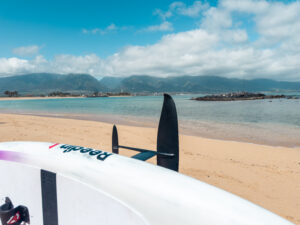
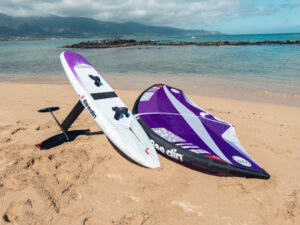
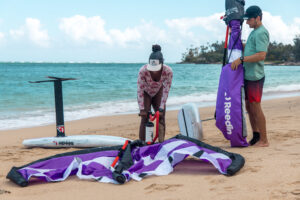
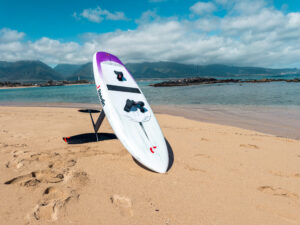
![Reedin StewardFoil 2026]()
![Reedin StewardFoil 2026]()
![Reedin StewardFoil 2026]()
![Reedin StewardFoil 2026]()
![Reedin StewardFoil 2026]()
![Reedin StewardFoil 2026]()
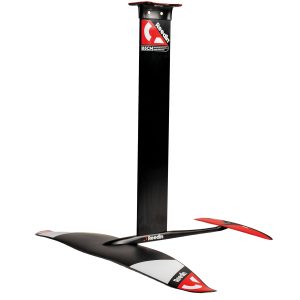
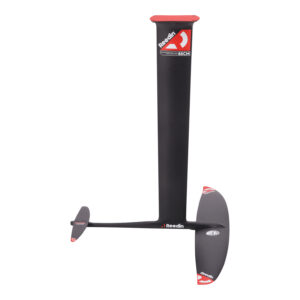
Reedin StewardFoil 2026
Price range: 849.00€ through 949.00€
Performance through Shape and Profile
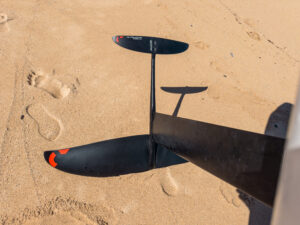
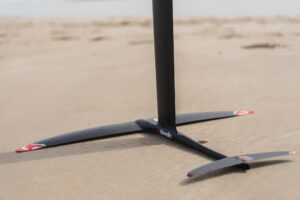
Beyond pure surface area, the outline (shape) of the stabilizer is a vital performance factor. A wider wingspan increases roll stability, while a narrower span makes the foil more agile for quick turns. Upward-turned tips, known as winglets, improve directional stability, helping the foil track straight without “hunting” or vibrating—this is particularly useful for long-distance cruising or riding a downwinder.
Profile thickness also matters. A thicker profile generates more lift at lower speeds, helping you get up on foil earlier, though it does cap your maximum speed. Our Reedin Flight Attendant review highlights how the front wing and stabilizer are engineered to work in harmony. This synergy allows for a shorter fuselage, providing exceptional maneuverability and effortless pumping when connecting waves.
-
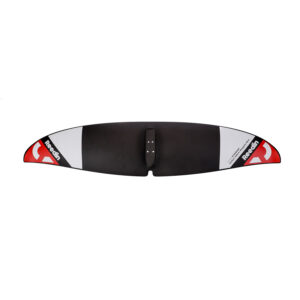
![FlightAttendant front wing/stabilizer]()
![FlightAttendant front wing/stabilizer]()
![FlightAttendant front wing/stabilizer]()
![FlightAttendant front wing/stabilizer]()
![FlightAttendant front wing/stabilizer]()
FlightAttendant front wing/stabilizer
Price range: 199.00€ through 779.00€
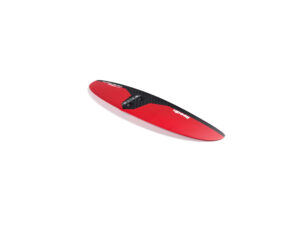
Choosing the Right Model for Your Riding Style
Deciding between different gear lines, such as the Flight Attendant and El Capitano, depends on your skill level and how you like to ride.
- Freeride and Stability: If you value predictability and want a foil that remains composed in choppy water, the Flight Attendant series is the way to go. It offers a broad speed range and is remarkably “ventilation-proof,” meaning it maintains lift even if a wingtip breaks the surface during a turn.
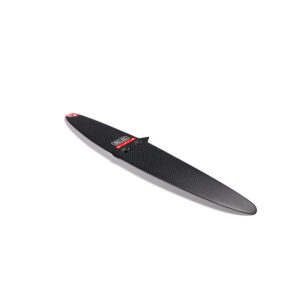
- Speed and Glide: For riders chasing speed records and maximum efficiency, the El Capitano series is the gold standard. Available in 155 cm² and 180 cm² sizes, these stabilizers are optimized for minimal drag and long-distance glides.
-
![ElCapitano front wing/stabilizer]()
![ElCapitano front wing/stabilizer]()
![ElCapitano front wing/stabilizer]()
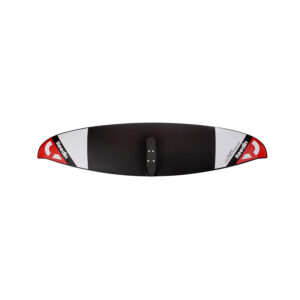
ElCapitano front wing/stabilizer
Price range: 199.00€ through 769.00€ -
![Reedin EL CAPITANO 2026]()
![Reedin EL CAPITANO 2026]()
![Reedin EL CAPITANO 2026]()
![Reedin EL CAPITANO 2026]()
![Reedin EL CAPITANO 2026]()
![Reedin EL CAPITANO 2026]()
![Reedin EL CAPITANO 2026]()
![Reedin EL CAPITANO 2026]()
![Reedin EL CAPITANO 2026]()
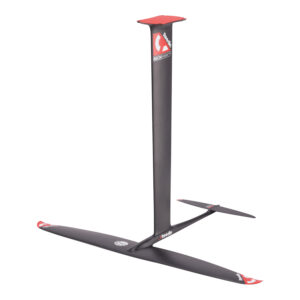
Reedin EL CAPITANO 2026
Price range: 1,209.00€ through 1,895.00€ -
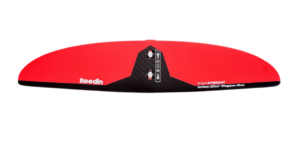
ElCapitano stabilizer
Price range: 199.00€ through 229.00€
Tuning and Angle of Attack
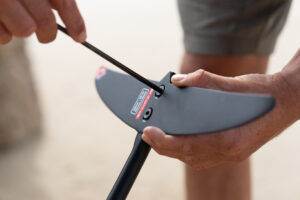
The stabilizer’s angle of attack—the angle at which it sits relative to the fuselage—significantly alters the foil’s behavior. A steeper angle creates more front-foot pressure and makes takeoffs easier, though it adds drag. A flatter angle reduces drag for higher speeds but requires more precise balance and footwork.
When assembling your gear, proper mounting is critical. Reedin systems are designed to provide a direct, stiff connection from your feet to the foil, provided they are correctly maintained.
Setting up and tuning your Reedin FlightAttendant Foil for the first time – Watch this video to ensure your gear is set up correctly for maximum performance.
Choosing the right stabilizer is a journey that evolves with your progression. Most riders start with a larger, more stable model to build confidence before moving toward smaller, faster wings. Explore our full range of foils to find the perfect match for your setup. If you need help finding spare parts or want to know how mast length affects your ride, feel free to contact us for expert advice.


 No products in the basket.