




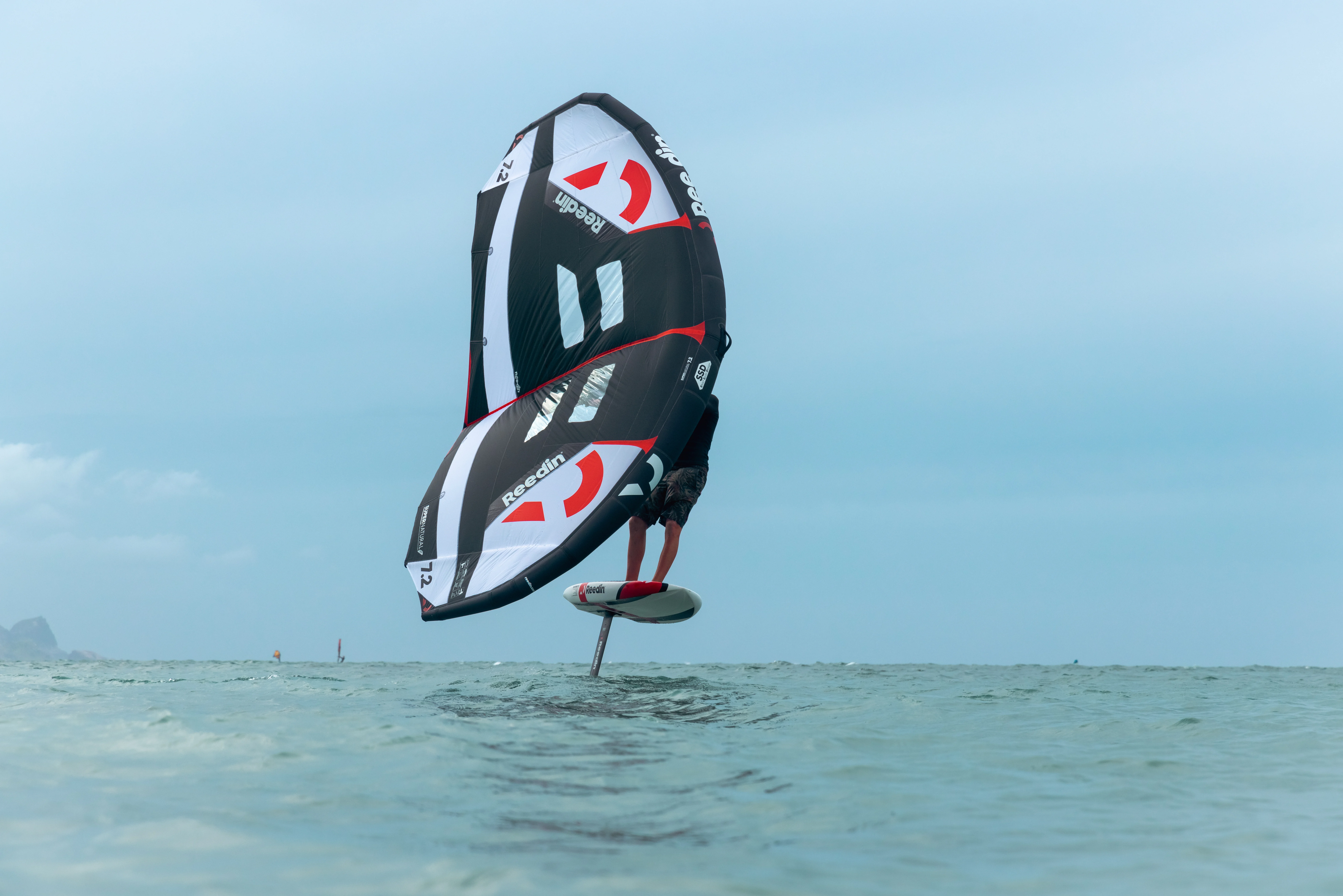
Ever felt like your board is glued to the water, or conversely, like it’s impossible to control once you’re airborne? The size of your front wing is the single most important factor in determining your takeoff speed, stability, and performance ceiling. This guide will help you select the ideal surface area based on your weight, skill level, and typical riding conditions.
Why Front Wing Surface Area Matters
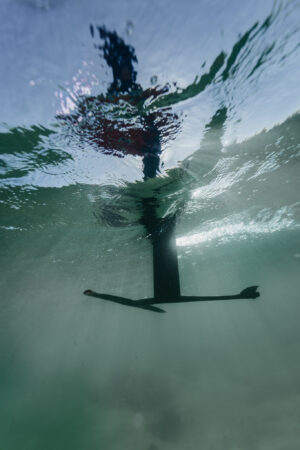
The front wing is the “engine” of your foil system, generating the lift required to fly as you move through the water. Its surface area, measured in square centimeters (cm²), directly impacts your stall speed—the minimum speed needed to get on foil and stay there. A larger surface area provides massive lift at low speeds but creates more drag as you go faster.
Larger front wings (1500–2300 cm²) offer exceptional stability and are much more forgiving while you are practicing wing foil exercises for beginners. These wings allow you to maintain flight even at a walking pace. Smaller front wings (under 1200 cm²) are built for speed and maneuverability. They require higher speeds or technical pumping to get flying, but they offer significantly lower drag and a much more responsive, “loose” feel.
Choosing a Size Based on Skill Level
Your experience level determines how much help you need from the foil to stay in the air. For beginners, the priority is stability; for advanced riders, it shifts toward efficiency and glide.
Beginners (1500–2300 cm²)
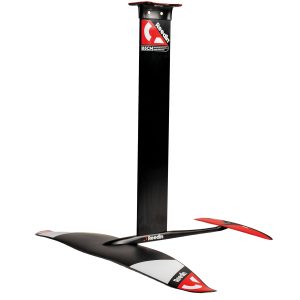
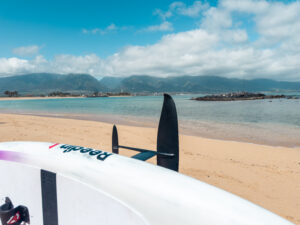
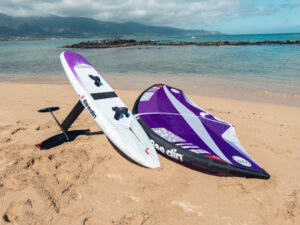
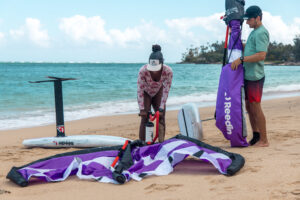
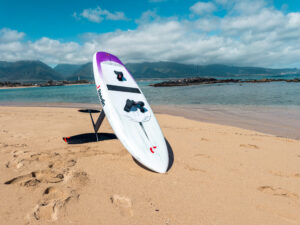
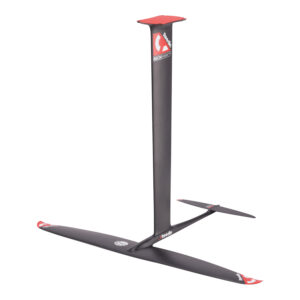
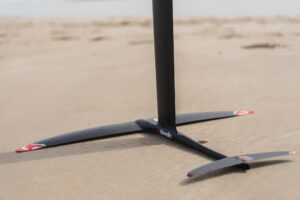
A beginner’s primary goal is achieving early lift and a stable flight platform. A large surface area makes the foil’s behavior predictable and keeps speeds manageable, which also makes crashes much safer. The Reedin StewardFoil series is specifically designed for this phase, offering wings up to 2300 cm². When paired with a suitable foil board, it provides a reliable foundation for rapid progression.
-
![Reedin StewardFoil 2026]()
![Reedin StewardFoil 2026]()
![Reedin StewardFoil 2026]()
![Reedin StewardFoil 2026]()
![Reedin StewardFoil 2026]()
![Reedin StewardFoil 2026]()
Reedin StewardFoil 2026
Price range: 849.00€ through 949.00€
Intermediate and Advanced (700–1500 cm²)
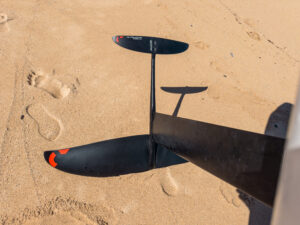
Once you’ve mastered consistent flight and are working on jibes, tacks, or jumps, it’s time to move to a smaller wing. Reducing the surface area decreases front-foot pressure and improves nimbleness. At this stage, many riders opt for Reedin Flight Attendant models, which are prized for their wide speed range and resistance to ventilation.
Rider Weight and Wind Conditions
Body weight is a critical variable because a heavier rider needs more lift (and therefore more surface area) to get the board out of the water.
- Under 70 kg: 1000–1400 cm² is usually the “sweet spot” for all-around riding.
- 70–90 kg: A standard beginner range is 1500–1800 cm².
- Over 90 kg: It is highly recommended to start with at least 2000 cm².
Wind strength also dictates your choice. In light winds (10–15 knots), you need a larger wing to “unstick” from the water. In high winds (over 20 knots), a large wing can become a liability, generating excessive lift that makes the board feel jumpy and hard to keep submerged. In these conditions, a smaller wing and an appropriately sized wing (sail) are essential.
Shape and Aspect Ratio
Beyond total surface area, the aspect ratio (the ratio of wingspan to chord/width) fundamentally changes how a foil feels.
- Mid-aspect wings (e.g., Flight Attendant) are versatile and balanced, making them the best choice for riders who want one setup for all conditions.
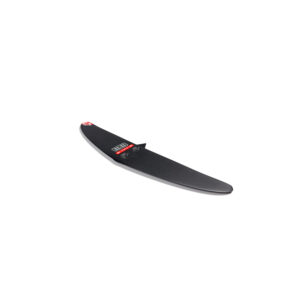
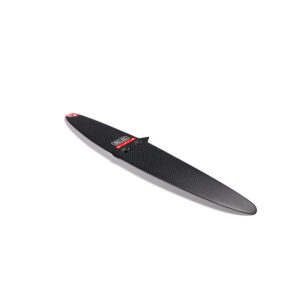
- High-aspect wings (e.g., El Capitano series) are long and narrow. They offer incredible glide and top-end speed but are more technically demanding and require better footwork and speed management.
-
![Reedin EL CAPITANO 2026]()
![Reedin EL CAPITANO 2026]()
![Reedin EL CAPITANO 2026]()
![Reedin EL CAPITANO 2026]()
![Reedin EL CAPITANO 2026]()
![Reedin EL CAPITANO 2026]()
![Reedin EL CAPITANO 2026]()
![Reedin EL CAPITANO 2026]()
![Reedin EL CAPITANO 2026]()
Reedin EL CAPITANO 2026
Price range: 1,209.00€ through 1,895.00€
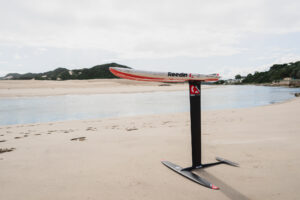
To understand the technical differences between these designs, check out our comparison: Flight Attendant vs El Capitano.
Finding the Right Balance
When choosing your first or next front wing, start by prioritizing your current skill level and weight. It is almost always better to have a wing that is slightly too large than one that is too small, as the larger wing will give you more time on foil to learn. As you improve, you can downsize and move toward higher aspect ratios to unlock more speed. Don’t forget that your mast length also plays a role in how that lift is managed, especially in choppy water.
| [Reedin’s NEW Wing Foil Package | Built to Learn and Progress! – Watch the video to see how the right gear speeds up your progress](https://www.youtube.com/watch?v=vpY5hYzrHdI) |
Explore our full range of foils to find the perfect match for your riding style.
 No products in the basket.