




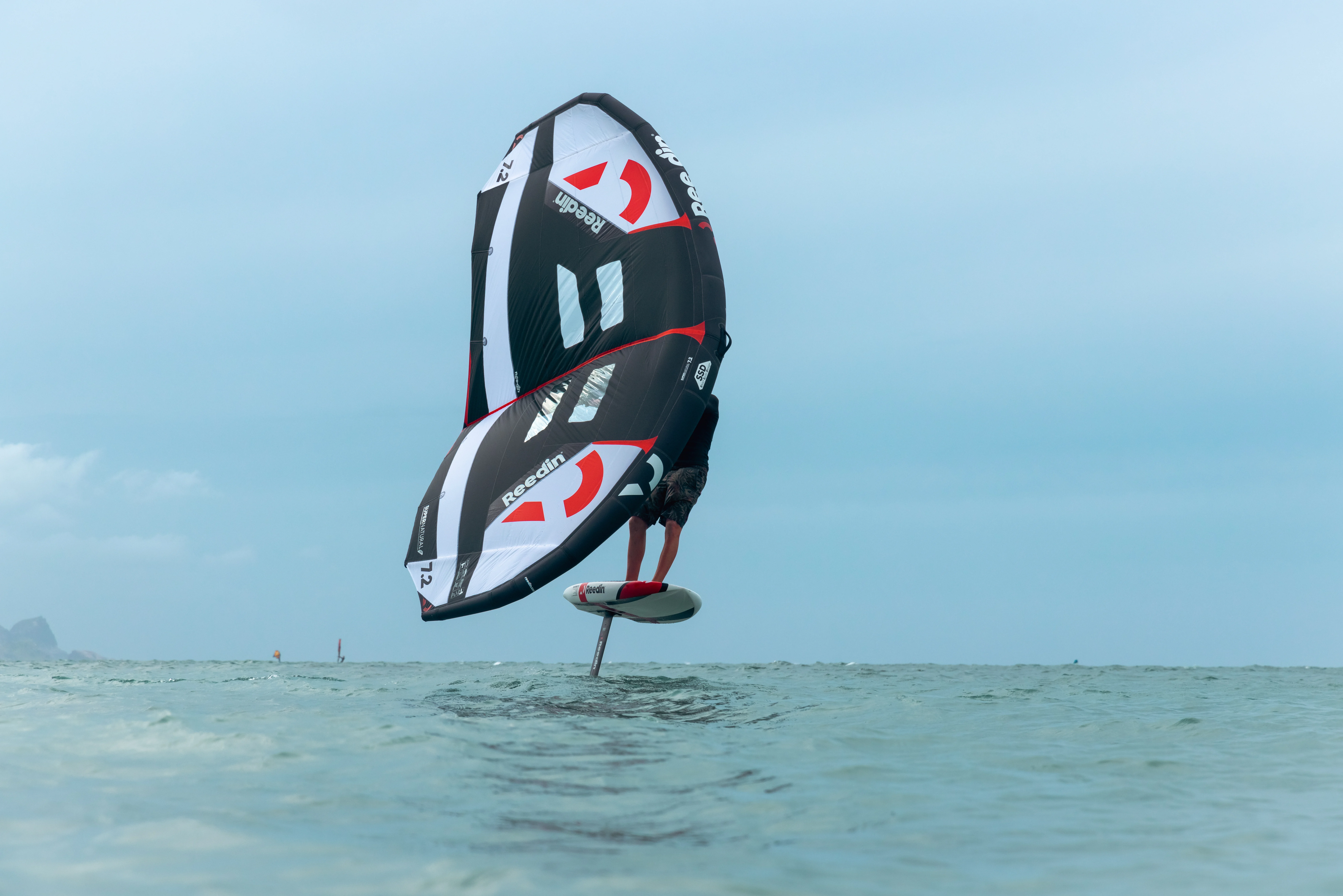
Standing on the shore and debating which wing to rig up is a dilemma every foiler knows. Choosing the wrong size can lead to a frustrating session—either you’re stuck pumping endlessly without enough power, or you’re dangerously overpowered and struggling for control. This guide will help you find the “sweet spot” between wind speed and body weight to ensure every session is a success.
Wing Size and Wind Speed: Key Rules of Thumb
When selecting a wing, your weight and the current wind strength are the most critical factors. Most riders aim for a specific range where the wing provides enough lift to get on foil without becoming unmanageable.
For an average rider weighing around 75 kg, a 5 m² wing is the industry standard. It is incredibly versatile, effectively covering a wind range of 15–25 knots. In lighter air (8–15 knots), you will likely need a 6 m² or even a 7 m² wing to generate the initial board speed required to lift onto the foil. Conversely, when the wind exceeds 25 knots, switching to a smaller wing—typically 3–4 m²—is essential for safety and comfort.
In cold-water environments, you must also account for the weight of your gear. A thick winter wetsuit, boots, and a harness can add 3–5 kg to your total weight. In these conditions, it is often wise to choose a wing 0.5 m² larger than you would normally use to compensate for the extra load and to help you glide through wind lulls.
How Weight and Skill Level Influence Your Choice
Your body weight directly dictates how much “grunt” is needed to pull the board out of the water. As a general rule:
- Lighter riders (under 70 kg): Should typically choose a wing 0.5–1 m² smaller than the standard recommendations.
- Heavier riders (over 85 kg): Require a significantly larger surface area to generate the torque and speed necessary to reach take-off velocity in the same conditions.
Experience also plays a major role. Beginners are usually better off with a slightly larger wing (by about 1 m²). The extra surface area provides a more stable platform and is more forgiving when your pumping technique isn’t yet perfect. Advanced riders, by contrast, can often “size down.” They use active pumping techniques and high-performance, lightweight wing gear to get on foil with a smaller wing, which then offers much greater freedom of movement once they are up and flying.
Light Wind Challenges and SSD Design Solutions
When wind speeds drop below 12 knots, winging becomes a technical challenge. This is where specialized equipment like the *Reedin SuperNatural SSD* (Short Span Design) excels.
A common frustration with large light-wind wings is their massive wingspan; if the wing is too wide, the tips often catch the water while you are pumping to get up. The SSD approach solves this by providing a large surface area with a shorter wingspan. This allows even shorter riders to use a powerful wing without the tips dragging in the water, maintaining maximum maneuverability.
This design is a game-changer for light-wind days. It allows for faster, more efficient pumping, creating lift in near-calm conditions and significantly extending your time on the water while others are left waiting for a gust.
Equipment Synergy: The Role of the Board and Foil
A wing does not work in a vacuum; it must be balanced with the rest of your setup. If you are riding a high-volume foil board, you can often get away with a smaller wing because the board’s buoyancy makes the start easier.
The foil underneath the board is equally critical. A foil with a large surface area (front wing) generates lift at much lower speeds, reducing the need for a massive wing overhead.
For those chasing performance, material technology is key. Wings like the Aluula-based *HyperNatural* or the carbon-reinforced *SuperNatural 2025* offer incredible stiffness. This rigidity ensures the wing holds its profile during gusts, converting every bit of wind energy into forward drive rather than allowing the canopy to deform.
Safety and Avoiding Common Mistakes
Choosing the wrong size can quickly turn a fun session into a struggle. An overpowered wing pulls too hard on the arms, leading to rapid fatigue and difficulty maintaining your line. If you find you can no longer “flag out” the wing or it feels twitchy and unstable, it is time to size down.
On the flip side, being underpowered leads to “hero pumping”—exhausting yourself just to stay on foil. This can be a safety risk if the wind dies further, as you may struggle to stay upwind and return to your launch point. A good rule is to always have about a 20% power reserve to handle unexpected lulls.
Finding the right equipment is the foundation of a great session. If you need help tailoring a setup to your weight and local conditions, explore the latest wings in our shop or reach out to our team. We offer fast shipping via DPD to get you on the water for the next forecast.
 No products in the basket.