




Do you ever feel like the kite is flying you, rather than the other way around? Mastering proper technique and developing a “feel” for the bar are the foundations of safe kitesurfing. When kite handling becomes second nature, you significantly reduce the risk of dangerous situations both on the beach and in the water. Gaining full command over your gear allows you to stop worrying about the mechanics and start enjoying every moment on the waves.
Hand Placement and Bar Technique
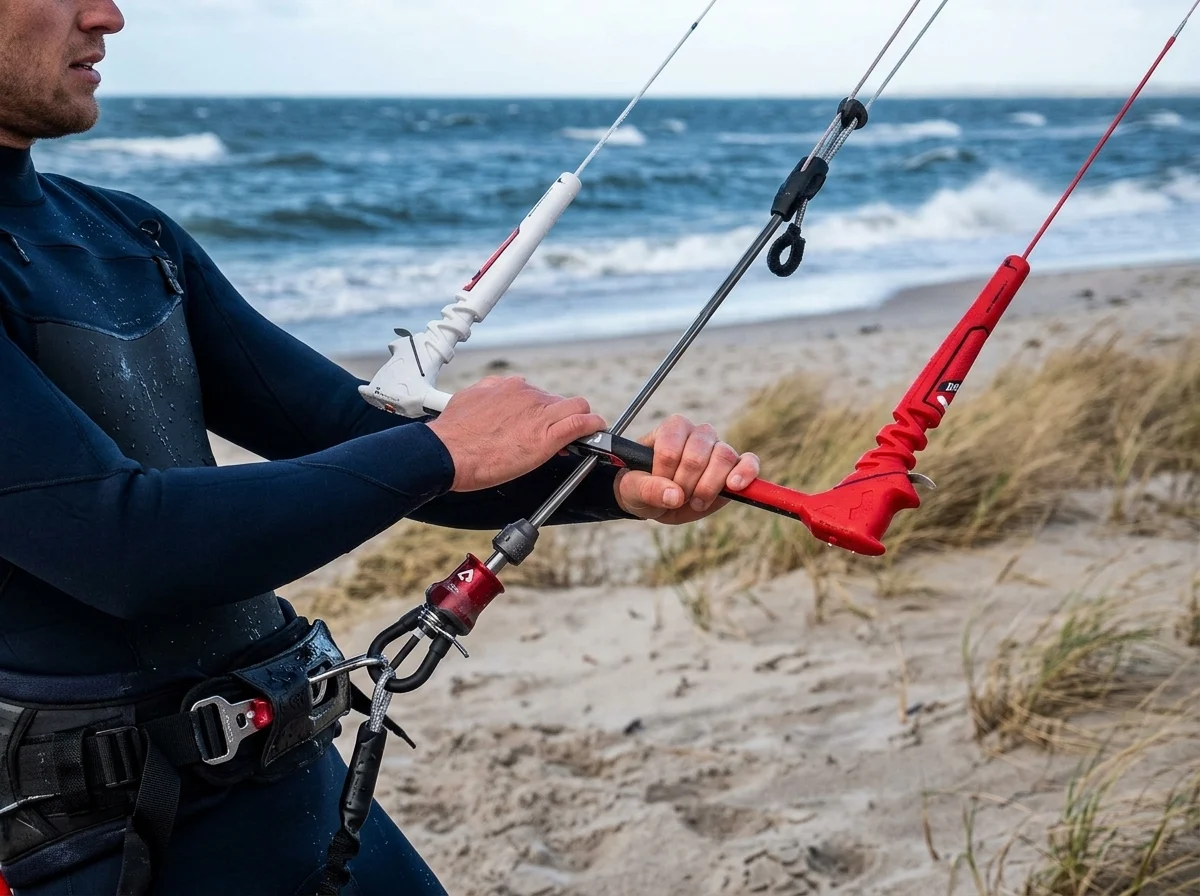
Control begins with the bar—the primary interface between you and the kite. A frequent mistake among beginners is gripping the bar too wide. This wide stance often leads to oversteering, causing the kite to move erratically or crash unexpectedly.
For maximum precision, keep your hands close to the center of the bar. This “narrow” grip allows for subtle, smooth adjustments rather than jerky movements. Much like keeping a focused grip on a steering wheel provides stability at high speeds, center-hand placement gives you a better tactile feel for exactly where the kite is in the sky.
Modern, high-quality control systems are engineered to enhance this feedback. Premium bars offer superior line feel and automatic untwisting mechanisms, allowing you to focus on your line Choice rather than untangling steering lines. Investing in a top-tier control system ensures the kite responds naturally to your every command.
Navigating the Wind Window and the Power Zone
A kite moves within a three-dimensional hemisphere known as the wind window. To visualize this, we use an imaginary clock face. The 12 o’clock position—directly overhead—is called the zenith. This is a neutral zone where the kite generates the least amount of pull. As you steer the kite lower and more toward the center (downwind), it enters the power zone.
The area between 11 and 1 o’clock is generally considered the neutral zone. This is the ideal place to keep the kite while resting, adjusting your board, or standing on the beach. However, beginners should avoid keeping the kite at the absolute zenith (12 o’clock) for extended periods; a sudden vertical gust can cause “lofting,” where the rider is unexpectedly lifted off the ground. Keeping the kite slightly to the side (at 11 or 1) provides more stability. Using kites known for their intuitive flight characteristics makes navigating these zones much safer and more predictable.
Managing Power: The Art of Sheeting and Depowering
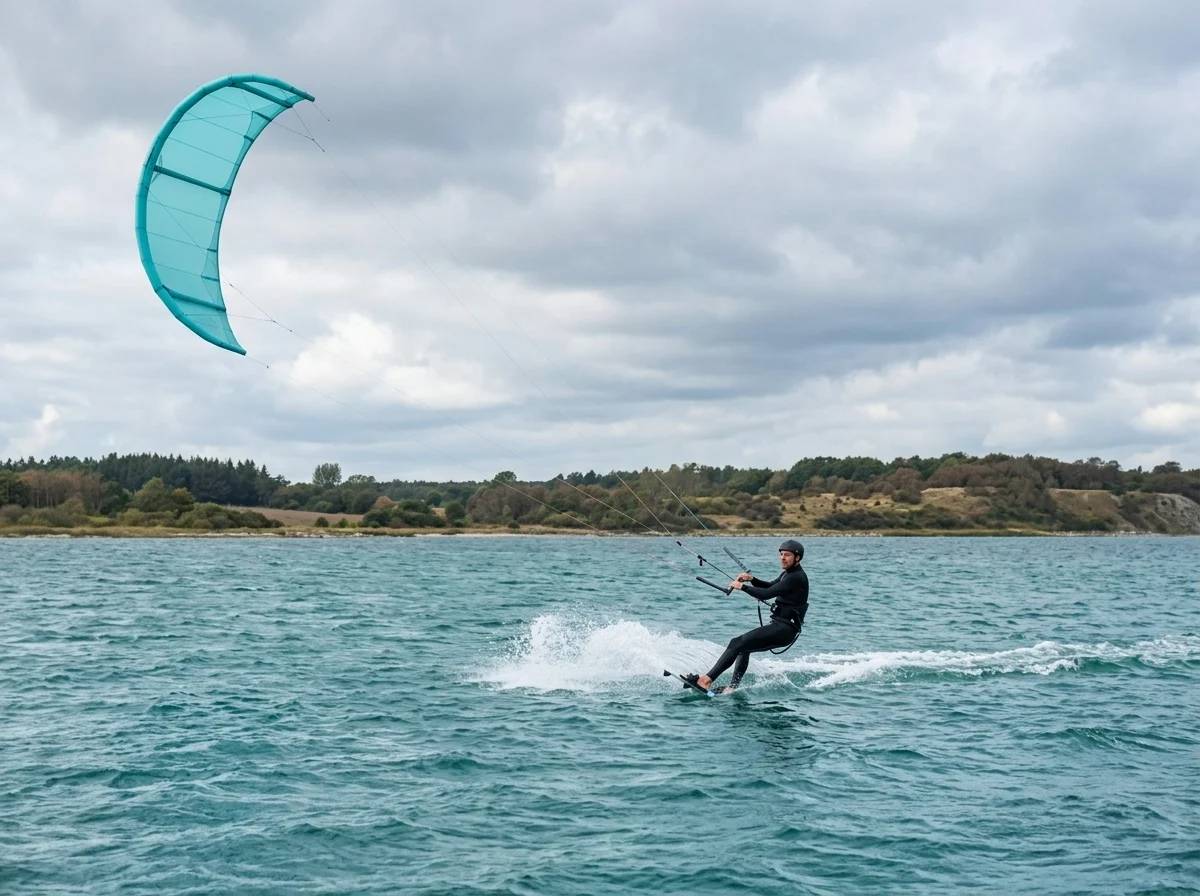
Effective control isn’t just about steering left or right; it’s about managing the pull. This is done by “sheeting” the bar—pulling it toward you or pushing it away.
- Sheeting In: Pulling the bar toward your body increases the tension on the back lines and increases the kite’s angle of attack, generating more power.
- Sheeting Out (Depowering): Pushing the bar away is your primary “brake.” This slackens the lines, flattens the kite’s profile, and immediately sheds power.
Power regulation requires a nuanced touch, especially in light winds. When flying specialized light-wind kites, over-sheeting (pulling the bar in too far) can actually “choke” the kite. This leads to a backstall, where the kite loses lift and falls backward out of the sky. Maintaining balanced bar pressure and consistent board speed is the key to keeping the kite stable when the wind is thin.
Safety Essentials and Emergency Procedures
Kitesurfing is an incredibly safe sport, provided you understand your equipment’s safety systems and can operate them instinctively. Statistics highlight the importance of proper training: the injury rate for beginners is approximately 65 per 1,000 hours, compared to just 4.8 for experienced riders. This discrepancy is almost always due to a lack of control or hesitation during a crisis.
To ensure every session is a safe one, adhere to these core principles:
- Master the Quick Release: Practice triggering your safety release without looking. You must be able to “flag out” the kite onto its safety line instantly if things go wrong.
- Respect Right-of-Way Rules: Generally, the rider on a starboard tack (right hand forward) has the right of way. Furthermore, riders entering the water should be given priority by those returning to shore.
- Learn Self-Rescue: You must know how to pack down your kite in deep water and use it as a sail to get back to shore if the wind dies or gear fails.
The most effective way to build these skills is through a certified kitesurfing course. Professional instruction ensures you learn safety protocols in a controlled environment, giving you the confidence to handle real-world conditions.
-
![Lohesurfi koolitus]()
![Lohesurfi koolitus]()
![Lohesurfi koolitus]()
![Lohesurfi koolitus]()
![Lohesurfi koolitus]()
![Lohesurfi koolitus]()
![Lohesurfi koolitus]()
![Lohesurfi koolitus]()
![Lohesurfi koolitus]()
Lohesurfi koolitus
Price range: 210.00€ through 1,779.00€
Avoiding Common Pitfalls
The most common mistake made by new riders is “over-steering”—using large, aggressive bar movements that create uncontrollable surges of power. High-performance kites require small, proactive corrections rather than reactive lunges.
If you ever feel overwhelmed or feel the kite pulling too hard, your first instinct should be to “let go” or push the bar away. This simple action kills the power and restores stability in most situations.
To see how high-performance gear handles extreme conditions with precision, you can read our deep dive into testing the Reedin HyperModel in 30-knot winds. Perfect control is a blend of consistent practice and choosing gear that matches your progression. Explore our selection of control bars to find the system that offers the perfect balance of comfort and responsiveness for your riding style.
 No products in the basket.