




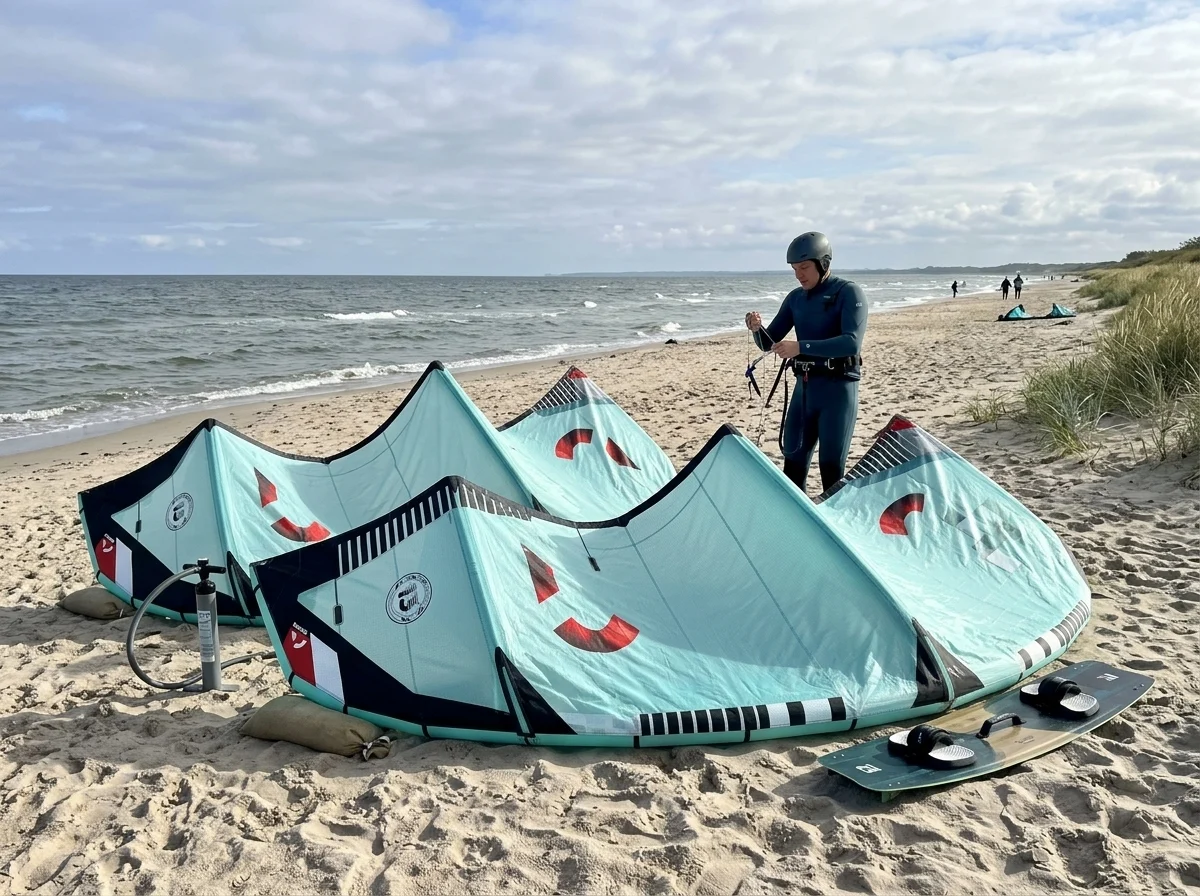
Choosing the right kite size is the single most important decision you’ll make before hitting the water. Whether you’re standing on a wind-swept beach or checking the forecast from home, your choice determines whether you’ll enjoy a rewarding progression session or spend your afternoon in an exhausting battle with the elements. To help you rig up with confidence, it is essential to understand the delicate balance between kite area, rider weight, and wind velocity.
Weight and Wind: The Core Variables
When it comes to kite selection, two primary factors dictate your decision: body weight and wind speed. The fundamental rule is straightforward: the heavier the rider and the lighter the wind, the more surface area (square meters) you need. Conversely, as the wind picks up or the rider weight drops, you must downsize to maintain control and avoid dangerous “overpowered” situations.
Kite sizes typically range from 5 m² to 17 m². For an average rider weighing between 75 and 85 kg, a standard quiver usually consists of two or three kites to cover the widest possible wind spectrum:
- Light Wind (12–15 knots): A 75–85 kg rider will typically reach for a larger kite, usually between 14 m² and 16 m².
- Moderate Wind (16–22 knots): This is the “sweet spot” for many, where a 10 m² to 12 m² kite offers the best balance of power and agility.
- Strong Wind (23–30 knots): When the whitecaps are out, it’s time to size down to a 7 m² or 9 m² kite to ensure safety.
If you weigh under 70 kg, you can generally use a kite 1–2 m² smaller than the standard recommendation. Conversely, riders over 90 kg will need more power and should choose a larger size. For those looking for simplicity, a versatile “all-in-one” kite model often provides the most intuitive control across a broad wind range.
Beyond the Wind: Riding Style and Board Selection
Kite size isn’t determined by weight alone; your choice of board and riding discipline plays a significant role. A large twin-tip board or a specialized light-wind board has more surface area, allowing you to plane earlier and use a smaller kite than you otherwise would.
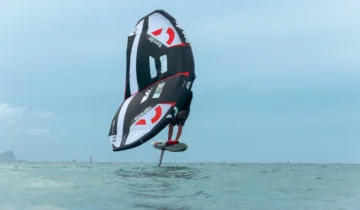
The most dramatic difference is seen in hydrofoiling. Because foils have minimal drag and generate immense apparent wind, foil riders typically use kites 2–3 m² smaller than those on standard twin-tips.
Your specific discipline also influences your choice:
- Wave Riding: Surfers often prefer slightly smaller, faster-turning kites that won’t pull them off the wave’s face too aggressively.
- Big Air: To maximize lift and hangtime, riders often “size up” slightly to ensure they have enough power to boost high and stay airborne.
- Ultra-Light Wind: In 4–6 knots, the kite’s construction becomes the priority. Dedicated light-wind models are engineered with lightweight materials to stay in the air when others have long since fallen out of the sky.
Safety and Progression: A Beginner’s Priority
If you are just starting your journey, the golden rule is: when in doubt, size down. It is significantly safer to be slightly underpowered on a smaller kite than to be struggling with a kite that is too large for your skill level. A common mistake is trying to stretch a single kite’s wind range too far, which can lead to dangerous situations where the depower system is maxed out and the kite becomes uncontrollable.
To build your confidence and technical foundation, we always recommend completing a professional kitesurfing course. You’ll learn essential safety techniques and how to manage your gear in varying conditions. Advanced riders, meanwhile, can look for high-performance models designed for specific extremes—whether that’s handling 30-knot storms or executing precision freestyle maneuvers.
Building the Ideal Kite Quiver
Most dedicated kitesurfers build a “quiver”—a set of kites tailored to their local spots. To maximize your time on the water without too much overlap, riders usually aim for a 2–3 m² gap between sizes. A popular and highly effective combination is the 7 m²–9 m²–12 m² setup, which allows you to ride comfortably in almost any forecast.
While manufacturer wind-range charts are an excellent starting point, always account for local factors like gustiness and air density. High-quality gear with good stability will help you manage these fluctuations more effectively. If you’re ready to compare technical specifications, our kites category offers a comprehensive selection for every rider.
The right kite size ensures you aren’t just surviving on the water, but thriving. Always base your choice on the day’s strongest gusts, and if you’re torn between two sizes, the smaller, safer option is almost always the right call.
Ready for your next session? Browse our kite collection and find the perfect gear to ride with confidence!

 No products in the basket.